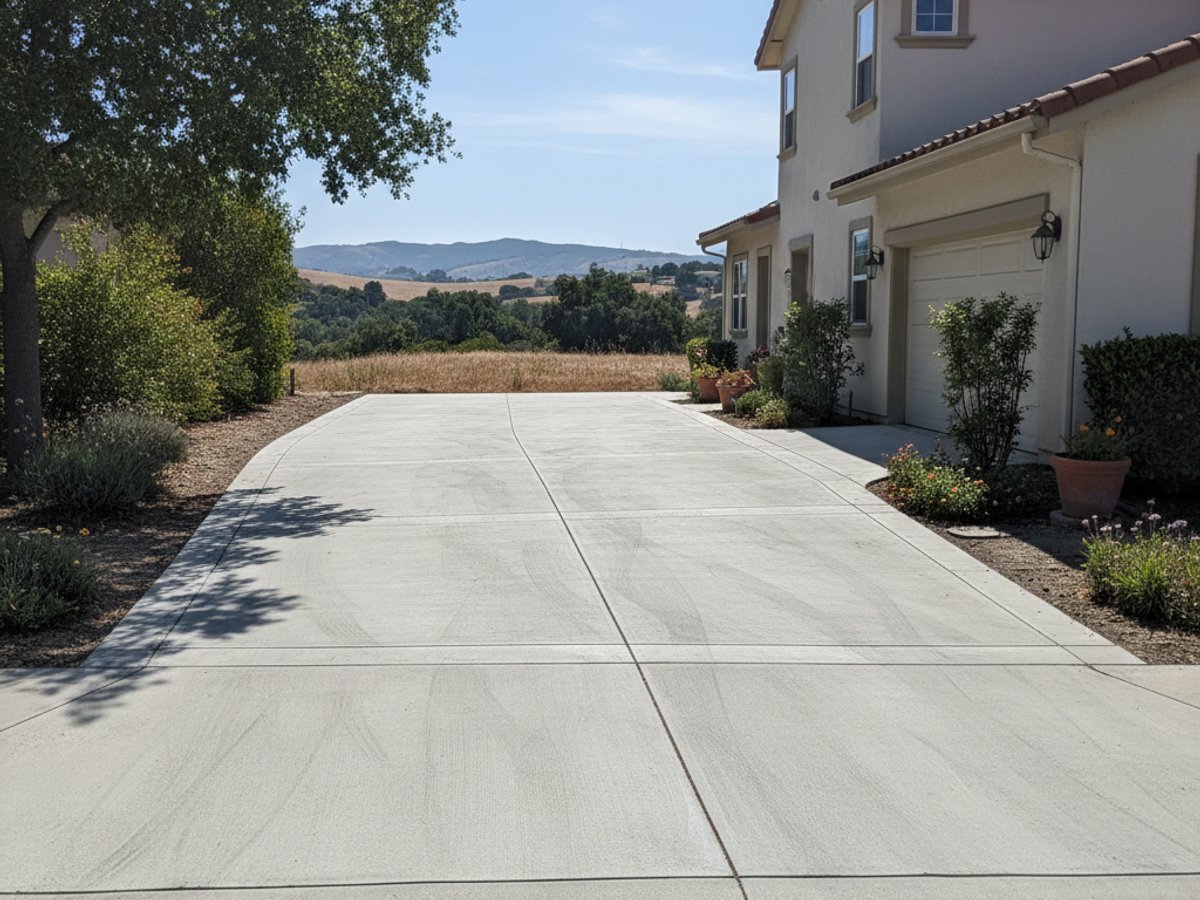
Concrete looks simple from the sidewalk. Mix it, pour it, let it set. What you can't see from the sidewalk is the four inches of compacted base underneath, the size of the rebar, or whether the guy quoting you $6 a square foot is planning to skip half of it. Most of the decisions that determine whether your driveway lasts 30 years or cracks apart in five happen before the first truck shows up.
Lynwood sits on old floodplain soil from the LA River, and a lot of it has a clay component that swells when it's wet and shrinks when it's dry. That movement is what pushes up sidewalk panels along streets in the older tracts near Lynwood High and Plaza Mexico, and it's what will crack a driveway poured on bare dirt without proper base. A contractor who understands this soil will talk to you about base prep before they talk to you about finish. One who doesn't will just talk about finish.
Ask about the base before you ask about the finish
Under any slab that's going to carry a car, you want 4 inches of compacted Class 2 road base, sometimes more if the soil tests soft. Skipping this step is the single most common way contractors cut cost, because it's invisible once the concrete goes down and it doesn't fail for a year or two. By the time you see the crack, the crew that poured it is long gone.
Ask what they're putting under the slab and how they're compacting it. A plate compactor, not just a hand tamp. If they shrug or say "we'll just pour it thick," that's not a substitute. Thickness matters too, 4 inches for a patio or walkway, 5 to 6 inches for a driveway that sees regular vehicle traffic, more if you're parking an RV or a work truck on it.
Rebar versus wire mesh isn't a minor detail
Wire mesh is cheaper and it's fine for a lot of patios. But it has a habit of sinking to the bottom of the pour if nobody bothers to pull it up on chairs while the concrete goes in, which means it ends up doing nothing. For driveways, steps, and anything near a retaining wall, #3 rebar on an 18-inch grid tied and set on chairs gives you real tensile strength in the middle of the slab, where it's needed. Ask which one they're using and why. A contractor who's done this a long time will have an actual answer, not a shrug.
What the weather here does to a pour
Lynwood doesn't get freeze-thaw cycles the way colder climates do, so that's one thing you don't have to worry about. What you do have to worry about is heat. In July and August, slab temperatures can climb fast once the sun hits fresh concrete, and the surface can dry out before the slab underneath has finished curing. That's how you get plastic shrinkage cracks, thin surface cracks that show up within hours of the pour, usually from water evaporating out of the mix faster than it can bleed to the surface.
A crew that knows what they're doing will pour early in the morning during summer, mist the surface if the wind picks up, and get curing compound or wet burlap down instead of leaving a slab bare in 95-degree heat. Rainy season, November through March, brings its own issue: you don't want to pour the day before a storm, and a fresh slab needs to be protected from rain for at least the first 24 hours or the surface can wash out and pit.
Permits, the right of way, and older lots
Any new driveway, driveway apron, or structural work like a retaining wall over a few feet tall needs a permit through the City of Lynwood's building division, and if the work touches the sidewalk, curb, or apron, that's technically public right of way and needs an encroachment permit too. A contractor who's pulled these before will know the inspection points, base inspection before the pour, and sometimes a final inspection after. One who tells you permits aren't necessary for a driveway is either wrong or hoping you won't check.
A lot of Lynwood's housing stock went up in the late 1940s and through the 1950s, which means older lots often have shifted sidewalk panels from decades of tree roots, old sewer laterals that run under where a new slab might go, and sometimes no formal grading plan on file at all. On these lots it's worth asking your contractor to check for utility lines and old plumbing before they cut or dig, not after. Newer construction nearby tends to have cleaner records and more predictable soil compaction, since it was engineered more recently, but even there it's worth asking.
Red flags that mean you should walk
- A bid that's dramatically lower than every other one you got. Concrete pricing doesn't have that much room in it once you account for material, base, and rebar. Somebody's cutting something.
- No written contract, or one that doesn't list thickness, base depth, and reinforcement type.
- Insists on full payment up front, in cash, before any work starts.
- Can't tell you where they'll cut control joints. These need to go in every 8 to 10 feet on a driveway, cut within the first day while the slab is still curing, so the concrete cracks where you want it to instead of wherever it wants to.
- Wants to pour a new slab directly over an old cracked one without breaking it up. That old crack telegraphs straight through, usually within a season.
- No license number they're willing to give you, or no insurance they can show you.
None of this is complicated once you know what to ask. It just isn't visible on the surface, which is exactly why some contractors count on you not asking. Get two or three bids, ask the same questions of each one, and pay attention to who actually answers versus who just tells you it'll look great. We do driveways, patios, walkways, retaining walls and slab work all over Lynwood and the surrounding towns, and you're welcome to ask us the same questions before you decide on anyone. More on what we do is on our concrete contractor page.